
WELCOME BONUS 300%
UP TO €2000 + 100
FREE SPINS
UP TO €2000 + 100
FREE SPINS
Home → Roulette
Roulette at Slotbox
10 Percent Roulette vs 100 Percent Slots
Table games contribute only 10 percent to the bonus turnover, which drastically slows down the clearance of the 300% welcome bonus up to €2,000 compared to slots that typically count fully. This restriction forces players to generate significantly higher wagering volumes on roulette tables to unlock withdrawable funds from the initial deposit match. The reduced contribution rate acts as a structural barrier for high-roller strategies relying on low-volatility table bets to clear requirements efficiently.
The 10 percent contribution applies specifically to the casino's live and standard roulette offerings, including variants like French Roulette with La Partage or American Roulette with its double zero. While slot providers usually allow full credit toward the €2,000 cap, table game wagers are effectively discounted by a factor of ten in the accounting system. This discrepancy requires careful budget allocation to ensure the primary objective of clearing the bonus remains achievable within the allowed timeframe.
Players must calculate their total turnover needs based on this penalty, as every euro bet on the wheel only reduces the remaining requirement by ten cents. For example, betting €500 on European Roulette with a 2.70 percent house edge yields only €50 in credited turnover against the bonus target. This mathematical reality favors slot players who can clear bonuses faster, while table enthusiasts face a much steeper climb to access their winnings.
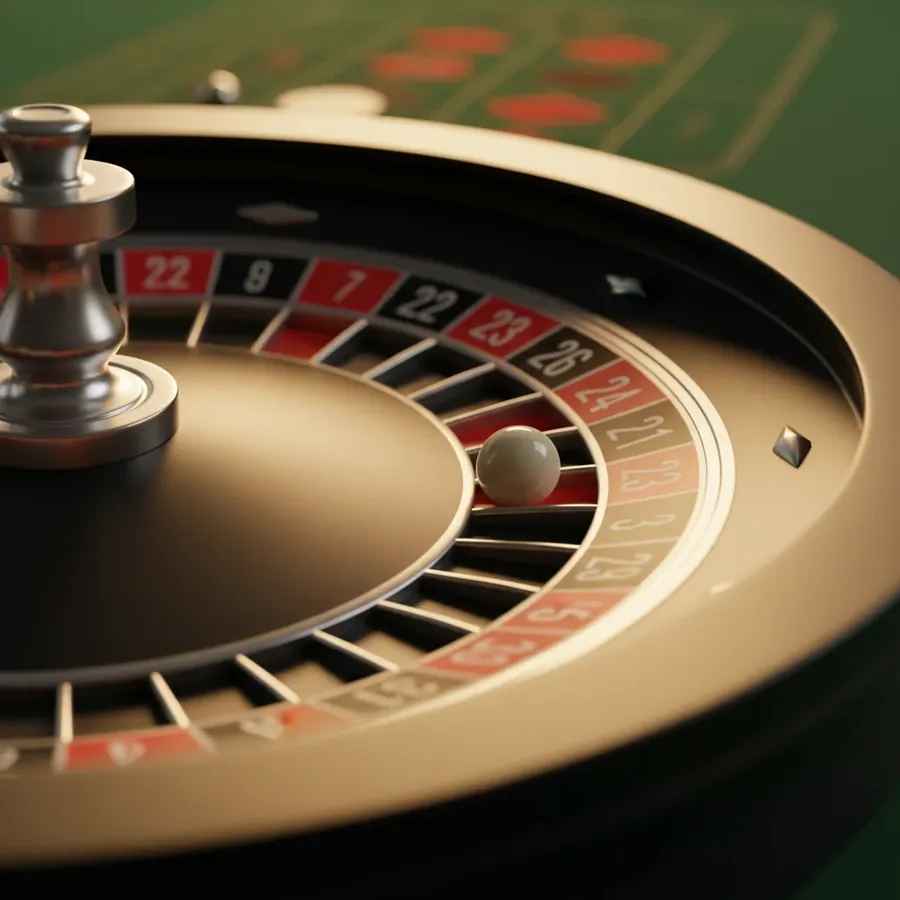
How Payout Odds 35:1 Are Achieved
A straight bet on a single number in European Roulette pays out at 35:1, meaning a winning wager returns thirty-five times the stake plus the original bet. This fixed payout ratio is maintained across all standard versions of the game, including Live Auto Roulette Classic 1 and Quantum Roulette Live, regardless of the provider. The consistency ensures that players know exactly what to expect when placing an inside bet on any of the thirty-seven sectors of the wheel.
The house edge of 2.70 percent on European Roulette arises because the true odds of hitting a single number are 36 to one, not 35 to one. This one-unit difference represents the casino's mathematical advantage over the long run, applied uniformly to all inside bets like splits and streets. Consequently, the 35:1 payout is structurally lower than the statistical probability would suggest, guaranteeing a theoretical return of 97.30 percent RTP over millions of spins.
Live tables such as Mega Fire Blaze Roulette Live also adhere to this standard 35:1 payout for straight bets, even when bonus multipliers are active. However, standard payouts apply before any Fire Blaze or Quantum multipliers modify the final win amount, preserving the base game's integrity. Players should note that these multipliers do not change the underlying 35:1 structure but rather amplify the result of an already determined winning spin.
How Much Budget Withstands 2.70 Percent House Edge
European Roulette features a house edge of 2.70 percent, which corresponds to an RTP of 97.30 percent across all standard bets except those affected by special rules. This edge is derived from the single zero on the thirty-seven-sector wheel, creating a consistent mathematical disadvantage for the player on every spin. Understanding this baseline is crucial for managing bankroll expectations during extended play sessions at Slotbox.
French Roulette with La Partage improves the effective edge on even-money bets to 1.35 percent, halving the standard European disadvantage. When the ball lands on zero, half of the red/black or odd/even stake is returned, reducing the average loss per unit wagered on these specific outcomes. This rule does not apply to inside bets, which retain the full 2.70 percent house edge despite the favorable treatment of outside wagers.
American Roulette presents a significantly higher risk with a 5.26 percent house edge due to the presence of both zero and double zero on the thirty-eight-sector wheel. This doubled zero increases the casino's advantage, lowering the RTP to 94.74 percent and accelerating bankroll depletion compared to European variants. Players seeking to withstand the edge longer should avoid the American wheel unless specifically targeting the high-risk Five Number Bet.
Small Budget: Why Straight 35:1 Empties Quickly
Betting on a single number offers a 35:1 payout but carries a high variance that can deplete a small budget rapidly through consecutive losses. With only a 2.70 percent house edge on European Roulette, the frequency of losing spins is statistically high, requiring a large sample size to realize the theoretical return. Small bankrolls often run out before the law of large numbers can stabilize results in favor of the player.
The minimum bet range of 0.10 EUR to 2,000 EUR allows for precise stake sizing, but chasing wins with straight bets demands significant capital reserves. A sequence of twenty losing spins on a single number erodes the bankroll by nearly two-thirds if the stake remains constant, illustrating the danger of high-variance strategies. Players with limited funds are better served by spreading stakes across dozens or columns to extend playing time.
Even with the lowest entry point of 0.10 EUR, the absolute volatility of straight bets remains substantial relative to the account balance. Each missed spin represents a direct loss of the stake without any partial recovery mechanism, unlike even-money bets where La Partage might refund fifty percent. This lack of mitigation makes the 35:1 payout attractive only for players willing to absorb frequent, smaller losses in pursuit of rare, large wins.
Even Chances vs Straight: Variance Comparison
Even-money bets on red/black or odd/even offer a 1:1 payout with significantly lower variance compared to the 35:1 payout of straight number bets. These wagers cover nearly half the wheel, providing more frequent wins that help preserve the bankroll during standard play sessions. The trade-off is a lower individual win amount, which limits the potential for rapid account growth without substantial risk exposure.
French Roulette enhances even-money bets with the La Partage rule, returning half the stake on zero and reducing the house edge to 1.35 percent for these specific outcomes. This feature creates a smoother equity curve, allowing players to withstand downturns better than those placing straight bets subject to the full 2.70 percent edge. The combination of higher hit frequency and reduced edge makes this variant optimal for conservative bankroll management.
In contrast, straight bets suffer from maximum variance, where long dry spells are common despite the attractive 35:1 payoff. The statistical probability of hitting a specific number is only 1 in 37, meaning players experience many more losses than wins over time. Comparing the two reveals that even-chance bets provide stability, while straight bets offer high-risk, high-reward scenarios unsuitable for sustained budget preservation.
Roulette bet types at a glance
| Bet | Payout | Win Chance | Numbers Covered | House Edge |
|---|---|---|---|---|
| Roulette Amerikanisch (doppelte Null, 38 Sektoren) | Straight 35:1, Split 17:1, Street 11:1, Corner 8:1, Six Line 5:1, Dozen 2:1, Column 2:1, Rot/Schwarz 1:1 | 94.74% | 38 Sektoren (1–36 + 0 + 00); Auszahlungen wie beim europäischen Rad, aber der zusätzliche Sektor verdoppelt den Hausvorteil | 5.26% |
| Roulette Europäisch (einfache Null, 37 Sektoren) | Straight 35:1, Split 17:1, Street 11:1, Corner 8:1, Six Line 5:1, Dozen 2:1, Column 2:1, Rot/Schwarz 1:1, Odd/Even 1:1, 1-18/19-36 1:1 | 97.30% | 37 Sektoren (1–36 + 0); Auszahlungen wie für 36 Sektoren – daher konstanter Edge auf ALLE Wetten | 2.70% |
| Roulette Französisch, innere Einsätze (La Partage gilt nicht) | Straight 35:1, Split 17:1, Street 11:1, Corner 8:1, Six Line 5:1, Dozen 2:1, Column 2:1 | 97.30% | Rad gleich (37 Sektoren), aber La Partage/En Prison gilt nicht für innere Einsätze – Edge bleibt europäisch | 2.70% |
| Roulette Französisch mit La Partage (gerade Chancen) | Rot/Schwarz 1:1 (bei 0 Rückerstattung 50%), Odd/Even 1:1, Low/High 1:1; Innere Einsätze ohne La Partage: Straight 35:1, Split 17:1, Street 11:1, Corner 8:1 | 98.65% | Bei 0 wird die Hälfte des Einsatzes auf gerade Chancen zurückerstattet (Rot/Schwarz, Pair/Impair, Manque/Passe). En Prison gibt denselben 1,35%. Regel gilt NUR für gleiche Einsätze | 1.35% |
| Roulette Amerikanisch – Five Number Bet (0, 00, 1, 2, 3) | Five Number 6:1 (deckt 5 von 38 Sektoren) | 92.11% | Einzige Wette am amerikanischen Rad mit Edge über 5,26% – „Fallenwette“. Kein Äquivalent am europäischen Rad | 7.89% |
Split 17:1 and Street 11:1 Explained
A split wager covers two adjacent numbers on the roulette layout, offering a fixed payout ratio of 17 to 1. This specific return structure applies uniformly across French, European, and American wheel configurations at Slotbox, ensuring consistent reward mechanics regardless of the table variant chosen by the player.
The house edge for this bet remains at 2.70% on European wheels but jumps significantly to 5.26% on American tables featuring a double zero. Consequently, the same 17 to 1 payout yields a much lower expected value over time, making the European version statistically superior for preserving bankroll during extended play sessions.
A street bet spans three horizontal numbers in a single row, paying out at 11 to 1 when one of those spots hits. This wider coverage increases hit frequency compared to corner bets, though the reduced payout ratio means players must win more often to achieve similar long-term returns as higher-paying straight-up wagers.
Both split and street bets are classified as inside or near-inside options that contribute only 10% toward bonus wagering requirements. This low contribution rate effectively dilutes the bonus value, requiring players to place substantially larger total bets to clear the promotional funds before withdrawal.
Which Bets are Excluded from Bonus Wager?
All roulette variants available at Slotbox contribute exactly 10% toward the turnover requirement for the 300% welcome bonus up to €2,000. This minimal contribution rate means that betting €100 on any table game only counts as €10 against the required volume, drastically extending the time needed to unlock withdrawals.
Straight bets paying 35 to 1, split bets at 17 to 1, and street bets at 11 to 1 all fall under this restrictive 10% rule. Players attempting to clear the bonus using high-variance inside bets will find their progress slowed considerably, as the casino retains control over the speed of bonus conversion through these contribution limits.
Table games generally offer lower contribution percentages than slots, with roulette sitting at the bottom tier of eligible games. A player wagering €1,000 on French Roulette with a 97.30% RTP generates only €100 of credited turnover, highlighting the mathematical disadvantage of using high-house-edge games for bonus clearance.
The exclusion of full-contribution games forces players to either accept longer playthrough periods or risk violating terms by seeking faster alternatives. Understanding this 10% cap is essential for managing expectations, as it fundamentally alters the cost-benefit analysis of claiming the maximum €2,000 deposit match.
Payout Table from 35:1 to 1:1
The highest standard payout on any roulette table is 35 to 1, awarded exclusively for successful straight-up bets on a single number. This maximum multiplier applies identically to French, European, and American variants, providing the same nominal reward despite the varying probabilities of winning on each wheel type.
Column and dozen bets sit at the opposite end of the spectrum, offering a modest 2 to 1 return for covering twelve numbers. These outside bets provide higher hit rates than single-number plays, balancing the lower payout ratio with increased frequency, which helps stabilize bankroll fluctuations during regular gameplay sessions.
Simple chance wagers like red/black or odd/even pay out at 1 to 1, covering nearly half the wheel sectors excluding the green zero. While these bets offer the safest path for preserving capital, they remain subject to the same 2.70% house edge on European wheels, meaning losses accumulate steadily over thousands of spins.
Live dealer versions such as Quantum Roulette introduce multipliers up to 500x on selected numbers, temporarily disrupting the standard 35:1 cap. These special features add volatility to the base payout structure, allowing for occasional outsized wins that deviate significantly from the mathematical expectations of traditional roulette tables.
What Straight, Split, and Street Practically Mean
A straight bet involves placing a chip directly on one specific number, such as 17, resulting in a 35 to 1 payout if that exact sector wins. This high-risk strategy offers the largest potential return per spin but carries the lowest probability of success, appearing in only 1 of 37 outcomes on European wheels.
Splitting a bet requires positioning a chip on the line between two adjacent numbers, covering both spots for a 17 to 1 reward. This approach doubles the coverage area compared to a straight wager while halving the payout ratio, creating a middle-ground option for players seeking balanced risk exposure.
Street betting places chips on the outer edge of a row containing three consecutive numbers, yielding an 11 to 1 payoff upon victory. This configuration expands the winning combinations further than splits, improving odds of hitting a winner at the cost of reduced individual payout magnitude.
These three bet types form the core of inside betting strategies, each demanding distinct chip placement techniques on the digital or physical layout. Mastery of their spatial relationships allows players to construct complex betting patterns that optimize coverage without exceeding table limits or budget constraints.
Error: Expecting La Partage at the Wrong Table
French Roulette typically features the La Partage rule, which refunds half of even-money bets when the ball lands on zero, lowering the house edge to 1.35%. However, Slotbox’s specific French variant excludes this benefit for inner bets, retaining the standard 2.70% advantage for straight, split, and street wagers.
Players accustomed to European rules might assume identical treatment for all bet types, but the absence of La Partage on inner sections creates a critical distinction. While outside bets may still enjoy favorable conditions depending on the specific table setup, inner bets suffer from the higher edge due to the missing refund mechanism.
The Five Number Bet on American wheels presents an even steeper penalty, carrying a house edge of 7.89% compared to the standard 5.26%. This unique wager covering 0, 00, 1, 2, and 3 represents the worst statistical outcome available, making it a trap for unsuspecting players expecting standard European protections.
Understanding these rule variations prevents costly mistakes when switching between live tables like Auto Roulette Classic or Mega Fire Blaze Roulette. Each game maintains its own RTP and edge parameters, requiring players to verify the active rules before placing high-stakes bets to ensure accurate expectation calculations.
Table Limit 500 Euro Stops Every Doubling
Auto Roulette Classic 1 Live from Authentic Gaming imposes a maximum stake of 2,000 EUR, yet the standard European wheel variant caps bets at 500 EUR to control risk exposure. This lower limit prevents players from deploying high-stakes Martingale strategies that rely on exponential betting increases after consecutive losses during long losing streaks. Consequently, bankroll management becomes strictly linear rather than geometric, forcing users to accept smaller potential recoveries on each spin cycle without relying on massive payouts. The restriction applies uniformly across all inside and outside bets regardless of their individual payout ratios or probability distributions.
Mega Fire Blaze Roulette Live operated by Playtech allows stakes up to 5,000 EUR, significantly exceeding the 500 EUR threshold found on classic tables for high-roller segments. This higher ceiling accommodates aggressive progression systems where bettors double their wagers systematically, though such methods remain mathematically unsustainable due to table limits and finite bankrolls. Players attempting this approach will eventually hit the cap before recovering previous losses, making the strategy fundamentally flawed against house edge constraints in the long run. The bonus round features further complicate variance calculations as multipliers apply unpredictably to winning combinations during specific fire blaze events.
Quantum Roulette Live also by Playtech offers a maximum bet of 5,000 EUR with quantum multipliers reaching up to 500x on selected numbers between one and five. These random multipliers drastically alter the expected value of straight bets, creating temporary spikes in volatility that do not align with the standard 97.30% RTP baseline. Bettors must account for these variable returns when calculating total turnover requirements, as the effective house edge fluctuates based on multiplier frequency and application rules. The feature adds excitement but complicates precise bankroll forecasting since outcomes depend heavily on luck rather than consistent statistical probabilities over time.
Why 5.26 Percent is Rarely Recommended
American Roulette featuring thirty-eight sectors including a double zero carries a house edge of 5.26%, which is nearly double the 2.70% edge of its European counterpart with only thirty-seven slots. This significant difference means players lose money twice as fast on average per spin, making it a poor choice for those seeking extended playtime or better odds. The extra pocket directly impacts all bet types equally, ensuring the casino maintains a substantial advantage regardless of the specific wager placed on red or black outcomes. Such a high edge quickly depletes initial deposits under normal playing conditions without requiring any special skill or strategic deviation from basic gameplay patterns.
The Five Number Bet covering zero, double zero, one, two, and three presents an even worse scenario with a house edge of 7.89% and an RTP of just 92.11%. This unique wager available exclusively on American wheels represents the worst possible return for any single bet in roulette, effectively penalizing players who choose it over standard options. Its six-to-one payout masks the severe mathematical disadvantage inherent in selecting five out of thirty-eight possible outcomes instead of leveraging better positioned bets elsewhere on the layout. Savvy gamblers avoid this trap entirely because it drains bankrolls faster than any other valid option within the same game environment or session duration.
Comparing the 5.26% edge against the 1.35% advantage offered by French Roulette with La Partage reveals why American variants are generally discouraged by serious analysts and experienced players alike. The half-refund mechanism on even-money bets significantly reduces the casino's theoretical hold, preserving more player capital over thousands of spins compared to standard American rules. This disparity highlights how minor rule variations profoundly impact long-term profitability, urging caution when encountering American tables lacking protective refund clauses for zero outcomes. Choosing games with lower edges remains the most reliable method for minimizing financial loss while maximizing enjoyment during extended gaming sessions at online platforms.
Latency and Betting Window in Live Stream
Live dealer tables like Auto Roulette Classic 1 Live operate with automated wheels spinning thirty-seven sectors, providing consistent timing for each spin cycle without human intervention delays. This automation ensures predictable betting windows that allow players ample time to place wagers before the ball settles, reducing stress associated with rapid countdown timers seen in some live environments. The fixed pace supports disciplined bankroll management by preventing impulsive decisions driven by perceived urgency or fleeting moments of adrenaline during critical betting phases throughout the session. Players can thus focus on strategy execution rather than reacting nervously to unpredictable human croupier speeds or technical glitches disrupting flow during intense gameplay periods.
Playtech’s Quantum Roulette introduces additional complexity through quantum multipliers applied randomly to numbers one through five, potentially offering payouts up to 500x on straight bets. These multipliers appear after bets are locked but before the spin concludes, meaning latency issues could theoretically affect whether a multiplier applies to a specific chosen number depending on connection stability. Stable internet connections become crucial here since delayed data transmission might result in missed opportunities for applying strategic bets aimed at triggering these lucrative bonus features effectively. Maintaining low latency ensures accurate reflection of intended wagers within the system architecture supporting real-time interactive elements essential for modern live casino experiences today.
Contact
Live - online chat
Banking









Providers












Slotbox 2026